
Course Content




Lesson 6: Tuning to Fit Your Voice
2:07
So what we've done is tune all of these to themselves, so they feel happy.
We have not used an outside source to get our pitch.
We've just tuned them so they feel comfortable with each other.
Let's review.
We've tuned the bass string to whatever the root of our scale is going to be.
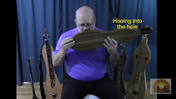
We chose that by hooing into the hole to see what is the instrument like.
That works fine if it's for you and you're playing by yourself.
So if you're someone who plays by yourself, this is going to be perfect for you.
Tune it, put the middle to be the 5th higher, and then decide what you want your melody string to be.
Are you going to be in a 155 or 1 58 tuning?
Now those numbers may be confusing to you or scary to you, but they also tell you the order in which the tuning is going to be written on the page when it tells you the 155.
The one is the bass string, and then the other two strings will be the 5th step of that scale or 158.
Now these aren't the only tunings, and if you're a dulcimer player, you've taken the dulcephur pledge with me.
You know that we can retune.
We can make different things happen.
But as we're just getting started, it's probably best to pick a tuning that you feel comfortable with and play in that one, so you can get comfortable with it and branch out after that.
And this, like I said, this is fine if it's it's for you playing, or traditionally, if it didn't fit your voice, you'd retune it so that you could sing the song you want to sing by making your dulcimer move around so it can fit your voice, instead of screeching or grabbing.
Because the song, as it's written and as you've tuned your instrument, doesn't fit you, make the instrument fit you so it can accompany you in your best voice.
The "1" is always the bass string. You can retune your dulcimer to match a comfortable pitch for your voice, if you're singing along with your instrument.
0 comments
Leave a comment
Please log in or register to post a comment